The History of American Banking
September 17, 2026
Ted Gavin, CTP, NCPM
Managing Director & Founding Partner
Corporate Recovery
Why It Started in Philadelphia and How Little Has Changed
By Ted Gavin, Managing Director and Founding Partner, Gavin/Solmonese
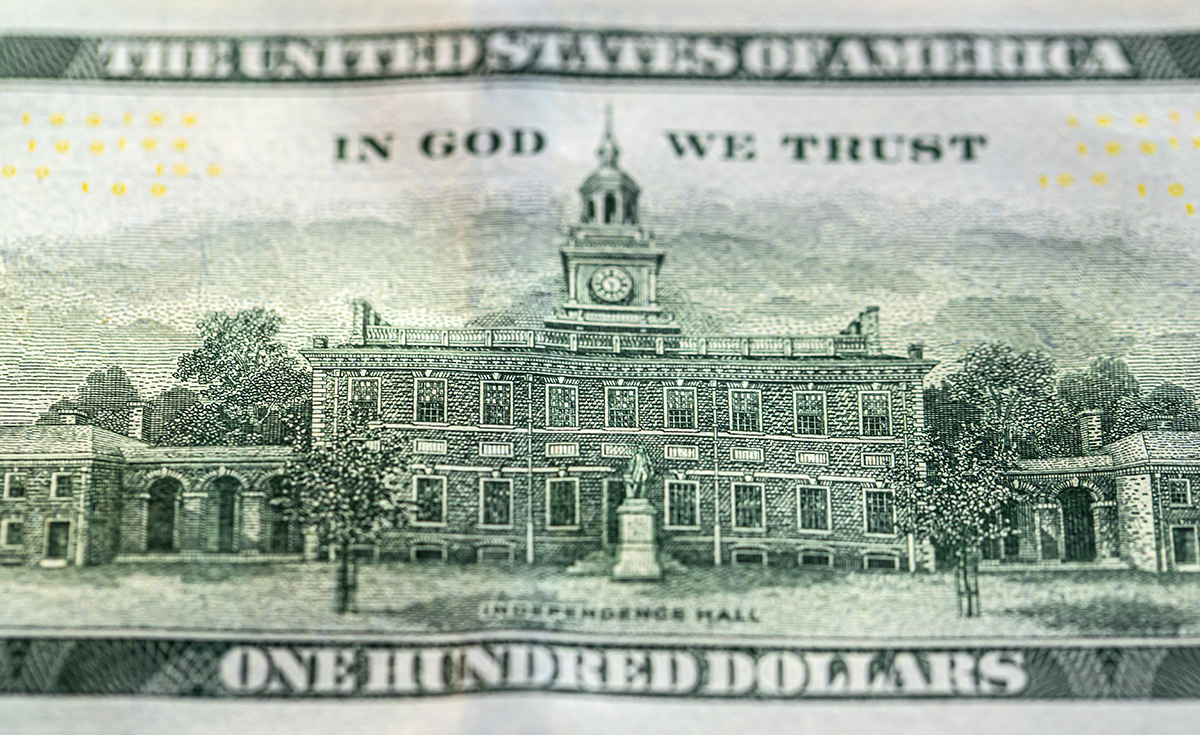
American banking started in Philadelphia for the same reason almost everything else about the early republic started in Philadelphia. The country started here. The first Bank of the United States was chartered about two blocks from the Pennsylvania State House (now called Independence Hall), and the building is still standing. As the colonies became a confederation and then a nation, the financial system that had to support that experiment grew up in the same place the experiment did. This article looks at where American banking began, why it began where it did, and how much of what those first banks were built to do still runs underneath the system we have today.
Why Philadelphia
Philadelphia was the center of gravity for the American experiment, so it became the center of gravity for American finance. That is the short version, and it is most of the story. While the capital moved – and it moved several times – the country’s financial focus did not follow it to every stop; it settled in New York and stayed there. But it started in Philly, alongside the government it was built to serve.
The banks that opened in that period were not optional; they were a response to necessity. When the colonies separated from England, they separated from England’s banking system too, and there was no domestic replacement standing ready. Even without that break, the young country would have needed a banking system of its own. Through the Revolution, American currency was a question mark at best. States created their own currencies, which solved nothing and added confusion. No uniform monetary law and no central currency existed. A nation cannot function that way for long – a Boy Scout troop cannot function that way for long. The banking system that grew up in Philadelphia was the answer to a problem the country could not avoid.
The First Real Banking Experiment Was a Restructuring
The most consequential piece of early American banking was not a bank at all in the way most people picture one. It was Alexander Hamilton’s plan for the federal assumption of state debt.
Thirteen shaky new states were carrying debt that made each of them a poor credit risk on its own. Hamilton’s plan consolidated that debt under the new federal government. It gave the states solid economic footing and gave the nation a large balance sheet right out of the gate. Suddenly, the country could act as a single, strong, unified financial entity. It could get credit. State economies improved because the weight had been lifted off them and moved somewhere it could be managed.
Look at that transaction from a restructuring seat and it is instantly familiar. It was a balance sheet restructuring. You take a group of entities that are individually distressed, you consolidate the liabilities where they can be supported, and you create a single stronger balance sheet that can actually function in the credit markets. Now that I think about it, Alexander Hamilton invented the Texas Two-Step – he just didn’t realize it. Also, there wasn’t yet a Texas. But creating a new entity and stuffing all the debt into it was revolutionary at the time. Now it’s just a divisive merger (though in the case of America’s banking, the debt went upstream instead of downstream). The mechanics are the mechanics, whether it’s 1790 or 2026. The first great act of American banking was, at its core, the same work we do now.
What a Bank Did Then, and What a Bank Does Now
The honest comparison between a bank in 1800 and a bank today starts with what was missing. A bank in 1800 was not selling off mortgages or issuing collateralized debt obligations. None of the machinery we now treat as ordinary had been invented. It was a far simpler time, economically speaking, and that simplicity is the biggest single difference between then and now.
The harder question is whether the fundamental purpose of a bank changed, or only the machinery around it. It’s easy to say that early banks were just places for farmers and merchants to store cash during slow periods. That is too small a view. They were more than that, even at the start. But the line between what those early banks were doing and what a modern bank does is not clean, because the center of the business has moved.
Here is the part that surprises people. Consumer banking today is a small and, frankly, unimportant part of the banking system. It is so marginal that banks have to be regulatorily incentivized or penalized into opening retail branches at all. There is no real money for a bank in a routine everyday depositor with a hundred dollars in a checking account, or in someone living paycheck to paycheck. The money is in credit cards. The money is in commercial credit, and in anything that carries a higher interest rate. That is where a modern bank puts its attention. The teller window is not the business. It is an obligation the business has to be coerced into keeping.
That obligation is not an accident, and the way it gets enforced tells you everything. During the financial crisis, regulators pushed through a wave of bank consolidations, sometimes over the acquirer’s preference. Wells Fargo’s acquisition of Wachovia at the end of 2008 was a government-forced sale to keep Wachovia from failing. Under the Community Reinvestment Act, regulators weigh a bank’s record of serving low- and moderate-income neighborhoods when that bank later asks for approval to merge, acquire, or open a new branch. So the leverage arrives at a predictable moment. When one of these large acquirers came back looking for permission to do the next thing it wanted to do, the answer came with a condition attached: open retail branches in economically disadvantaged neighborhoods, primarily inner-city areas, or the next approval does not come. The regulator has to use the leverage of the next deal to force branches into places the bank sees no profit in serving. That is how far consumer banking has slid down the priority list.
What the Earliest Banks Understood That We Keep Forgetting
Ask what the first banks knew about risk and credit that the modern system has lost, and the answer is not really about the first banks. It is about a lesson the system learned the hard way, wrote down, and then sacrificed on the altar of profit.
The Glass-Steagall (The Banking Act of 1933) was put in place for a reason. It took about a hundred and fifty years of banking to arrive at it, and we only arrived because banks kept forgetting a simple thing: a bank occupies a position of trust with its depositors, and that trust does not survive the bank speculating with the depositors’ money. The Depression made the cost of forgetting this fact impossible to ignore. Glass-Steagall went into place. Behind that wall we built the largest economy in the world and a solid middle class.
Then we pulled the wall down. The logic was that banks could be trusted to gamble with their customers’ money because they would be good for it. That was almost correct – it turns out the party that ends up being good for it is the taxpayer. After being in place for sixty-six years, it took only eight years for the banking system to implode after the repeal of Glass-Steagall.
So I am not sure the modern system has learned anything the earliest bankers could have taught it. The banks are doing roughly what they were doing 250 years ago. There are just lots more zeros and commas now.
What Early Banking Has to Do With the Work We Do
There is a straight line from Hamilton’s debt assumption plan to a restructuring engagement today, and it is worth naming, because it explains why a firm like ours pays attention to this history at all.
Restructuring is balance sheet work. It is taking entities that cannot function under the weight they are carrying and finding the structure that lets them function again. The first time this country did that at scale, it did it in Philadelphia, with thirteen distressed states and a federal balance sheet built to hold what they could not hold alone. The tools have multiplied since then. The instruments are more complex, the liabilities are better hidden, and the numbers have more digits. The underlying problem has not changed. Neither has the shape of the answer.
And if Lin-Manuel Miranda wrote a musical about the Texas Two-Step, you know we’d be getting tickets to see it.
For more on how we approach balance sheet problems for companies today, see our work on company-side advisory and our article on DIP financing and who really controls a modern restructuring. For the longer arc of how the restructuring system itself took shape, see the history of bankruptcy.
Frequently Asked Questions
Why did banking start in Philadelphia?
Banking started in Philadelphia because Philadelphia was the center of the early United States. The first Bank of the United States was chartered there, close to what is now Independence Hall, and the building still stands. As the seat of the early government and the commercial center of the new nation, Philadelphia was where the financial system needed to support the country first took shape. The focus of American banking later shifted to New York and remained there even as the national capital moved.
What was the first bank in the United States?
The first Bank of the United States was chartered in Philadelphia and served as the young nation’s central banking institution. It was part of the early effort to create a uniform monetary system for a country that, coming out of the Revolution, had unstable currency and no central banking structure of its own after separating from England.
How were early American banks different from banks today?
Early American banks operated in a far simpler financial system. They did not sell mortgages, issue collateralized debt obligations, or use the complex instruments that define modern banking. The largest difference is not only that machinery but where the business sits: today, consumer and retail banking is a small part of the system, while commercial credit, credit cards, and higher-interest products drive most of a modern bank’s attention and profit.
What did Alexander Hamilton’s debt assumption plan do?
Hamilton’s plan had the federal government assume the debts of the individual states. It consolidated the liabilities of thirteen financially shaky states onto a single federal balance sheet, which gave the states stronger economic footing and gave the new nation the credit standing to function as a unified financial entity. In modern terms, it was a balance sheet restructuring.
Why was the Glass-Steagall Act important?
Glass-Steagall separated commercial banking from speculative activity after the Depression made the risks of combining them clear. It reflected a basic principle that banks hold a position of trust with their depositors and should not gamble with deposited money. The economy built behind that separation was large and stable. When the separation was later removed, the risks it had contained returned, and the public ultimately bore the cost.