A Super Brief History of the US Dollar
August 17, 2026
Anne Eberhardt, CFE, CAMS
Senior Director
Valuation & Litigation Consulting
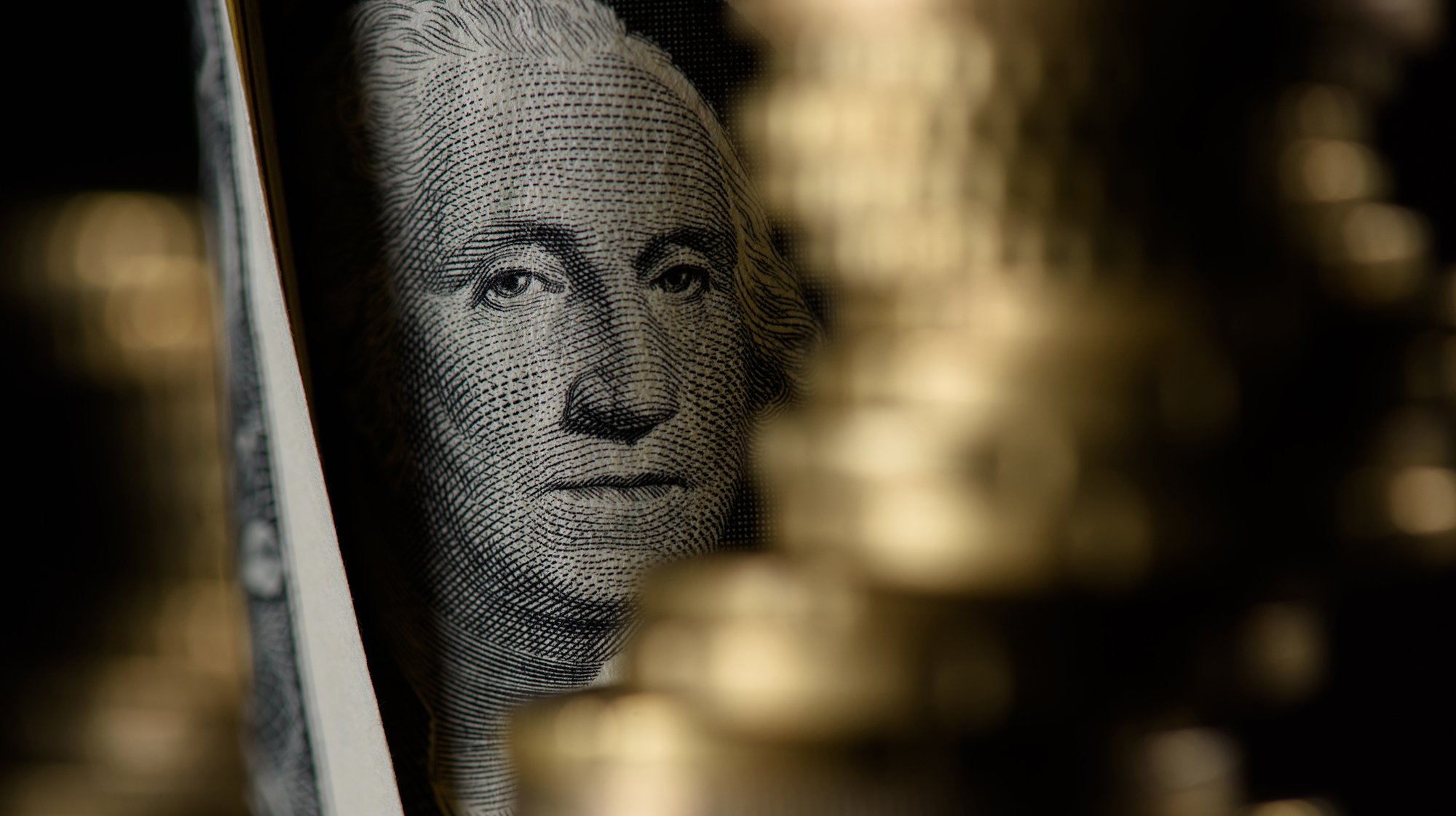
Twelve-and-a-half score years ago, when in the course of human events the Founders declared it necessary to dissolve the political bands that had connected the Thirteen Colonies to George III’s iron fist, the U.S. dollar was born. On July 4, 1776, upon receipt of the telegram informing him that the Second Continental Congress had declared independence, General George Washington ordered that his face appear on a newly printed currency, and soon the world’s great powers were clamoring to fill their central banks’ coffers with this awesome new currency, backed by liberty, justice, and the American Way.
Okay, so maybe that’s a bit of an exaggeration. But the story of how the U.S., and its currency, came to dominate the planet politically, culturally, and economically, is as fascinating as it is unlikely from those humble beginnings in downtown Philadelphia 250 years ago.
CASH RULES EVERYTHING AROUND ME: C.R.E.A.M. GET THE MONEY, DOLLAR-DOLLAR BILL Y’ALL
In 1792, Congress passed The Coinage Act, establishing the dollar as the standard unit of account, along with a “bi-metallic” standard to allow trading U.S. dollars directly for gold and silver. Still, until the American Civil War, money in the U.S. was decentralized and chaotic, with all kinds of trading instruments, including private coins and scrip. The National Banking Acts of 1863 and 1864 overhauled the banking system, creating a set of federally chartered national banks, along with the Office of the Comptroller of the Currency to regulate them. Money was now becoming standardized and regulated, and the federal government issued bonds as a method of financing the war.
YOU’VE GOT THE BRAWN, I’VE GOT THE BRAINS, LET’S MAKE LOTS OF MONEY
Regulation, though, did not create an especially stable system. Over the next half century, as the nation industrialized and expanded its borders from sea to shining sea, rapid economic growth was punctuated by painful economic contractions, with perhaps as many as thirteen recessions and depressions during that time.
It may seem like an arcane argument now, but the populist issue in the late 19th Century centered on “bi-metallism,” that is, the monetary system allowing for ready trading of U.S. dollars into silver and gold, a system that was in place from the earliest days of the Republic.
The problem with bi-metallism was its inherent instability, and in accordance with Gresham’s Law, “bad” money tended to drive out the “good” money. The 1873 Coinage Act ended the standard silver dollar, effectively placing the U.S. dollar on the gold standard, though until the turn of the 20th Century and the election of William McKinley, the laws vacillated between a pure gold standard and a hybrid form of bi-metallism.
FOLLOW THE YELLOW BRICK ROAD: TO THE GOLD STANDARD
William Jennings Bryan’s “Cross of Gold” speech catapulted him to the top of the Democratic ticket in 1896 as the standard bearer for reform of the monetary system. The ongoing economic depression at the time pitted those who favored a return to the use of silver and those who preferred the gold standard.
Bryan’s loss to McKinley marked the end of bi-metallism, and while the Gold Standard Act of 1900 did not end the circulation of silver coins, their value was now pegged to gold.
The Gold Standard Act, however, did not put an end to economic instability, and the Panic of 1907 exposed the vulnerability of banks to bank runs and liquidity crises, ultimately leading Congress to pass the Federal Reserve Act of 1913 and creating the modern standardized bank note we think of as the U.S. dollar. More importantly, though, the creation of the first true central bank in the U.S. provided policymakers greater flexibility to manage liquidity and the supply of U.S. dollars in response to times of economic crisis.
OVER THERE
The June 1914 assassination of Franz Ferdinand did not necessarily need to lead to a war that would destroy the Austro-Hungarian, Ottoman, Russian, and Prussian empires, while mortally wounding the French and British empires along the way. Nor was it obvious at the time that out of the ashes of this catastrophe would arise a new kind of empire, governed by international law, trade, and, eventually, the U.S. dollar. But viewed from a certain angle about a century later, that’s pretty much what happened.
At the turn of the 20th Century, Britain was the primary locus of global finance and trade, while the U.S. had become an industrial powerhouse. When the Great War began, despite America’s official policy of neutrality, the weapons the British and French armed forces used against the Germans were produced in U.S. factories and, importantly, were sold on credit.
The entry of the U.S. into World War I in the spring of 1917 tilted the stalemated conflict in the direction of the Anglo-French allies, with the war famously ending at the eleventh hour of the eleventh day of the eleventh month a year-and-a-half later.
ALL WE ARE SAYING IS GIVE PEACE A CHANCE
A year after the conclusion of World War I, John Maynard Keynes published The Economic Consequences of the Peace, a scathing critique of the Paris Peace Conference, which the 36-year-old economist had personally witnessed as an official representative of the British Treasury. In this slim volume, filled with tables of economic data, Keynes argued that it would be impossible for Germany to comply with the reparations requirements imposed on her by the victorious (and vindictive) nations, and that the consequences would be dire.
The structural problem with the peace negotiations was that Britain and France, having borrowed so heavily from the United States, were dependent on German reparations payments to fund their own debt service requirements. Keynes’s warnings proved prescient, with a debt cycle fueled by German borrowings from U.S. creditors to make reparations payments, which were then used by Britain and France to service their debt obligations to the United States. This debt spiral was one of the most important factors contributing to the Great Depression that began in October 1929, and eventually, the Second World War.
BROTHER CAN YOU SPARE A DIME?
The Great Depression threw the nation into the worst economic downturn it had ever faced. Even the newly-created Federal Reserve was unable to address the core problems at the root of the Depression, and many of its policies arguably deepened the crisis. President Herbert Hoover’s reputation as the “Great Humanitarian” during the Great War was obliterated by the Great Depression, and in 1932, he was defeated in a landslide against Franklin Delano Roosevelt, whose “New Deal” platform promised government intervention to provide relief, recovery, and reform to aid the “forgotten man at the bottom of the economic pyramid.”
FDR presided over a nation in turmoil, and over the next decade implemented a number of government programs intended to regulate capitalism in a way that would return the U.S. to prosperity. And while many of these reforms arguably worked, by the late 1930s, the country still had not returned to previous levels of prosperity, with many observers fearing that sluggish growth would become the new normal, or even worse, that some form of Bolshevism might be the answer to America’s economic malaise.
WAR…WHAT IS IT GOOD FOR?
By the mid-1930s, most observers assumed that another European war was inevitable, but Congressional laws advocating neutrality reflected the isolationist mood in the U.S., which held that the Great War had been an unnecessary disaster. It wasn’t until Japanese incursions into Mainland Asia and Germany’s swift defeat of Poland that the U.S. began ramping up weapons production.
The Neutrality Act of 1939 was enacted to allow belligerents to purchase U.S. weapons if they paid in cash and transported the weapons themselves. Because the British controlled the seas, this policy effectively meant U.S.-manufactured weapons were sold only to Britain and France, not to Germany.
After the fall of France in 1940, and as British gold reserves began to shrink, British Prime Minister Winston Churchill warned President Roosevelt that Britain might not be able to continue to pay for supplies. At the urging of the Roosevelt administration, Congress passed the Lend-Lease Act in March of 1941, allowing the U.S. to supply war materials to countries the U.S. considered vital to its own defense, without the requirement for immediate payment. U.S. factories began churning out weapons, which poured into Britain, and following Operation Barbarossa in June 1941, into the Soviet Union as well.
Without getting all sentimental and patriotic about the crucial role the Greatest Generation played in defending civilization from barbarism, I will merely point out here that providing aid to the Allied combatants had the practical effect of increasing U.S. factory production, returning the U.S. to full employment, essentially ending the Great Depression.
MONEY MAKES THE WORLD GO ROUND: BRETTON WOODS
At the conclusion of the most terrible war ever fought, the architects of the postwar political and economic frameworks were eager to avoid the mistakes that had been made following the First World War. John Maynard Keynes was invited to lead the effort to construct a postwar economic framework at the Bretton Woods Mountain Resort in 1944, with the goal of creating a more stable and prosperous postwar order.
It was natural that the U.S. would find itself at the center of this new system. The commitment the U.S. had shown to supply the weapons needed to wage the War, as well as to re-develop the devastated nations of western Europe through the Marshall Plan, made the U.S. the obvious choice to lead this new order. As the holder of two-thirds of the world’s official gold reserves, the Bretton Woods paradigm of fixing exchange rates against the dollar increased the attractiveness of using it as the world’s reserve currency.
KEEP ME SEARCHING FOR A HEART OF GOLD: THE “NIXON SHOCK” OF 1971
The following couple of decades marked a period of extraordinary economic growth and prosperity, both in the U.S. and in the developed world. But by the mid-1960s, the U.S. was running persistently high budget deficits to fund the hot war in Vietnam, the Cold War pretty much everywhere else, and the War on Poverty at home.
At the heart of Bretton Woods was the commitment that participating nations could convert U.S. dollars directly into gold, but by the early 1970s, it was an open question whether the U.S. could honor that commitment. As foreign governments continued converting dollars into gold, draining the nation’s gold reserves, the Nixon administration was forced to end the Bretton Woods system, making the dollar a true fiat currency governed by a central bank.
MONEY: IT’S A GAS, THE RISE OF THE PETRODOLLAR
With the U.S. completely decoupled from gold and running large trade and budget deficits, the story of the continued dominance of the U.S. dollar becomes more interesting…and complicated. One of the biggest reasons is, in a word, oil.
As the U.S. economy developed and became more hydrocarbon-based in the years following the Second World War, U.S. companies led the development of foreign sources of oil, especially in Latin America and the Middle East. At the same time, access to cheap oil created a country increasingly dependent on it, and by the early 1970s, domestic demand began to outstrip production, with the U.S. importing about a third of its oil, much of it from the Middle East.
The Yom Kippur War in 1973 strained relations between the Arab nations and the U.S., which had backed Israel. The Arab members of the Organization of Petroleum Exporting Countries retaliated by cutting production and refusing to sell oil directly to the U.S., creating a massive shock to global oil supplies and sending the U.S. economy into a severe recession.
Nevertheless, the U.S. was not rendered powerless. Saudi Arabia, the largest and most influential oil-exporting Arab nation, understood its need for continued American expertise to develop its oil fields and to continue to reap the benefits of its massive oil revenues.
The rise of the petrodollar became a mutually beneficial arrangement, under which the Arab oil exporters would sell oil in U.S. dollars, already the dominant currency for oil sales, which they would then invest into the financial markets the U.S. offered. In exchange, the U.S. provided weapons and security agreements with the Saudis, as well as military protection of global shipping lanes.
Put simply, the Saudis provided oil and financial cooperation, while the U.S. provided security and protection. This arrangement has never been fully stable, and there continue to be shocks to the system (ahem, check your daily news feed), but to this day, the U.S. dollar remains the primary exchange mechanism in the global oil trade.
IT’S A COMPETITIVE WORLD: EVERYTHING COUNTS IN LARGE AMOUNTS
As U.S. budget deficits have climbed over the past 25 years (because of the Global War on Terror, followed by the Financial Crisis of 2008, and as a response to the COVID-19 pandemic) U.S. public debt has soared to more than $31 trillion, up from $3.4 trillion in March 2001. At around the same time, total public debt as a percent of GDP has risen from just under 60 percent to about 120 percent, with debt crossing the 100 percent threshold between 2010 and 2015. Interest payments now exceed federal expenditures on defense.
Are these numbers alarming? Is the U.S. dollar on the brink of being displaced as the world’s reserve currency by a competitor? Are we all going to die?
Macroeconomists are fiercely debating these issues. But be warned. Their field is relatively new, without an especially great track record for predicting the future. The Federal Reserve itself is a relatively new creature that has been refining, through trial and error, its methods for fulfilling its mandates over the past 115 years. The transition to a digital information-based economy from an industrialized powerhouse is not complete, and the AI revolution is upon us. We are truly in unprecedented times.
I don’t want to be accused of practicing history without a license, and the reality is that if I knew the answers to what lies ahead, you’d probably find me on some nice Spanish beach sipping sangria and re-watching old Robert Redford movies. (I’m all right, Jack, keep your hands off of my stack!) Anyone who’s telling you they know the answer is probably trying to sell you gold or ammo for that bunker you’re building in Idaho.
With that in mind, here are my two cents.
NOBODY ELSE BUT TINA
Beginning in the early 2000s, it became fashionable to talk of the rise of the BRICS, a new economic alliance built on the booming economies of Brazil, Russia, India, China, and South Africa. Analysts believed these economies, representing nearly half of the population of the planet, would eventually coalesce around a common market zone similar to that of the European Union, perhaps even forming a common currency, presenting a formidable challenge to U.S. dollar hegemony.
With all of China’s efforts to link the economies of Asia, Africa, Eastern Europe, and the Middle East through its Belt and Road Initiative, and though it has become the world’s leading manufacturing power base, the global markets are not yet flocking to the Renminbi as a global reserve currency. Neither are they flocking to the Ruble, the Rupee, the Real, or the Rand. Nor has the rise of cryptocurrency provided a credible alternative to the dollar.
MONEY: IT’S A HIT
At the moment, there is no alternative. For all its perceived weaknesses, the liquidity the dollar continues to offer across global markets, as well as the legal and regulatory frameworks that provide strength and credibility to the currency, remain unmatched. Can that change? Absolutely. Nothing lasts forever. Just ask the British, who hosted the world’s premier reserve currency a mere century ago.
But it looks like, as we celebrate two hundred and fifty nifty years of America, we U.S. citizens will continue to enjoy all those benefits we have grown accustomed to during our lifetimes as beneficiaries of Yankee Doodle Dollar.
Anne Eberhardt is a Forensic Accountant in the New York office of Gavin/Solmonese with over twenty-five years of experience in conducting investigations and providing expert witness services. Her career was forged during the collapse of the oil and gas industry, and she has performed many of her projects during periods of extreme crisis, including within conflict zones.