Spirit Airlines: A Victim of Its Own Genius
May 21, 2026
Ted Gavin, CTP, NCPM
Managing Director & Founding Partner
Corporate Recovery
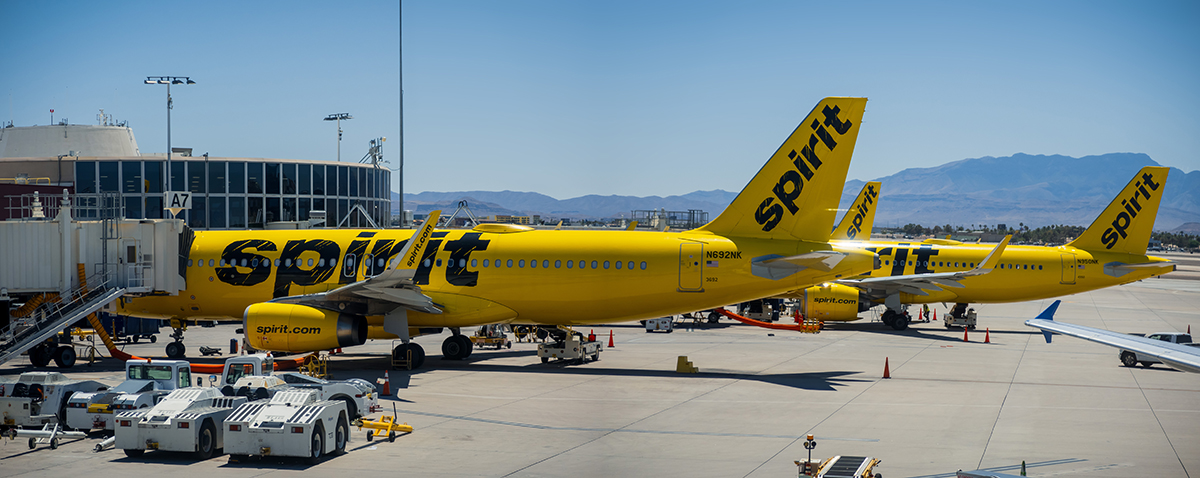
When you have seen one airline bankruptcy, you have kind of seen them all. Spirit is no exception.
That is not dismissiveness. It is pattern recognition. Airlines are structurally claim-heavy and asset-light in ways that are unusual even among distressed companies. Spirit did not own a single airplane. Nearly its entire fleet was leased, as is the case for most carriers. The engines were leased separately. What Spirit actually owned were things like gate leases and landing rights, and those can be very lucrative, particularly to other airlines that move quickly to fill the void. One airline goes away, and every other airline benefits just a little bit. That dynamic was as true in Spirit’s case as it has been in every airline bankruptcy I have watched.
What made Spirit unusual was not the bankruptcy. It was the combination of factors that made the bankruptcy inevitable, and the degree to which at least some of those factors were self-inflicted.
The Model That Worked Too Well
Spirit was, at one point, genuinely brilliant at what it did. Strip enough out of an airline operation and you can compete on price in ways that full-service carriers cannot match. Bag fees, seat selection fees, boarding fees, breathing oxygen fees, fees for everything. The base fare becomes almost irrelevant because the ancillary revenue fills in the margin. For a period, it worked. Spirit was profitable. The model made sense.
The problem is that the model depended on keeping costs lower than the revenue the fees could generate, and the single largest cost in any airline operation is fuel. Jet fuel is not a fixed cost. It moves with global markets, geopolitical events, and supply disruptions in ways that management cannot control. What management can control is whether it hedges against that exposure.
Spirit did not hedge fuel. For an ultra-low-cost carrier with almost no cushion in its cost structure, not hedging fuel is a decision that looks like genius when prices are stable and looks like catastrophic negligence when they are not. When the U.S. and Israel launched strikes on Iran in late February of this year and fuel prices climbed sharply, Spirit burned through roughly $100 million in incremental fuel costs between March 1 and April 30 alone. There was no hedge. There was no protection. The liquidity that had been carefully preserved through two bankruptcy restructurings drained in two months.
Fuel hedging is not an exotic financial instrument. It is a cheap insurance policy. Not having it, for a carrier whose entire business model required costs to stay below a specific threshold, was a structural vulnerability that eventually became fatal. But to get that insurance policy, the airline has to have decent credit. Spirit did not.
Two Bites at Chapter 11, Neither Enough
Spirit filed its first Chapter 11 in November 2024, after a proposed merger with JetBlue was blocked on antitrust grounds and a prior attempt to merge with Frontier had also failed. The first filing was narrowly scoped. Debtholders exchanged roughly $795 million in debt for equity, which cleaned up Spirit’s balance sheet considerably. What it did not do was address the operating business in any fundamental way. Spirit emerged from that bankruptcy in March 2025 with less debt and the same structural problems.
Five months later, in August 2025, it filed again.
The August 2025 filing was a Chapter 22, which is what the restructuring field calls a repeat Chapter 11. The first reorganization plan had been confirmed. Whether it was actually achievable was a different question, and the answer turned out to be no (obviously!). The plan that emerges from a Chapter 11 confirmation hearing has to satisfy the court’s feasibility standard, which requires the debtor to show the plan is not likely to be followed by liquidation or further reorganization. Spirit’s first plan satisfied the legal standard, but not the practical one. It did not survive contact with a fuel price spike of the magnitude that followed.
The second restructuring went further. Spirit reduced its planned fleet to between 76 and 80 aircraft, concentrated its network on its strongest markets, and filed a restructuring support agreement that the airline’s lawyers said had brought it within reach of an early summer exit from Chapter 11. Then rising fuel costs destroyed the company’s remaining liquidity. The government bailout discussions that followed went nowhere. By the end of April, it was clear there was no path forward. Spirit stopped flying on May 2, 2026.
What Airlines Actually Own
The asset picture in an airline liquidation is different from most other industries, and it matters for understanding what happens to creditors when a carrier fails.
Spirit held gate leases at major airports including Houston, Dallas, Las Vegas, and Los Angeles. It also held takeoff and landing slots at LaGuardia and Newark, which are slot-controlled airports where access is constrained and valuable. Those slots and gates do not disappear when the airline does. They get sold and bought, and competing carriers move quickly to capture them. That competition benefits the creditor pool, but it is also a reminder that what looks like a catastrophic collapse from the outside is, from the industry’s perspective, a reallocation of constrained assets.
The planes are a more complicated story. Spirit owned 28 aircraft outright, all in the Airbus A320 family. The rest, more than 60 planes, were leased, and lessors moved immediately to reclaim them. The timing of Spirit’s collapse created an additional problem: jet fuel prices are up roughly 70 percent since the Iran war began in February, which makes fuel-thirsty aircraft less attractive to buyers right now. Planes that would have found buyers quickly in a different market are sitting in the Arizona desert waiting for conditions to improve. The liquidation will produce recoveries, but the timing has compressed values.
The broader lesson is one that applies to every airline case. Airline creditors are not just owed money. They are competing for a specific set of constrained, location-dependent assets whose value is tied directly to the operating conditions of the rest of the industry. That dynamic makes airline bankruptcy claims administration meaningfully different from other industries, and it is why the field that developed around airline restructurings, from United to Delta to US Airways to Spirit, has its own distinct body of practice.
The Government Bailout That Did Not Come
Spirit’s court filings describe months of discussions with the Trump administration about emergency financing, including a potential government loan and equity stake. Those discussions did not produce a result.
That outcome was not surprising, for a specific reason. The parties whose cooperation would have been necessary to make a bailout work, the existing creditors and stakeholders who would have had to accept a worse position to make room for government money, had already concluded that more capital was good money after bad. When the people who are already in the deal will not put more money in, it is very difficult to convince an outside party that they should. The government would have been taking on risk that the people closest to the situation had already decided was not worth taking.
The “disaster of the government’s own making” framing in Spirit’s filings refers to the antitrust enforcement that blocked the JetBlue merger. That merger, had it been permitted, would have given Spirit the resources and the network scale to compete differently. Whether it would have changed the outcome is impossible to know. What is true is that Spirit was left to restructure twice as a standalone carrier after regulatory action removed what may have been its best strategic option.
What This Case Is Really About
Spirit’s failure will be attributed in various quarters to the Iran war, to the JetBlue merger block, to the second bankruptcy, to consumer preference shifting away from ultra-low-cost travel, to the Pratt & Whitney engine recall that grounded a significant portion of its fleet during its first restructuring. All of those things are real. None of them is the whole story.
The core of the story is that Spirit built a model with almost no margin for error and then didn’t have the insurance that might have given it some. The fuel hedge was not the only gap, but it was the one that proved fatal. A business that can only survive if one of its major input costs stays within a certain range, has no protection against that cost moving outside that range, has made a structural decision that eventually catches up with it.
Chapter 11 is a powerful tool. It can shed debt, renegotiate leases, reject unprofitable contracts, and buy time for a business to reset. What it cannot do is fix a business model that does not work. Spirit used Chapter 11 twice. The first time, it fixed the balance sheet and left the model alone to continue to bleed cash. The second time, it went further but ran out of time. In the end, the model that had once been its competitive genius became the thing it could not escape.
Seventeen thousand jobs are gone. The yellow planes are in the desert. The gates and slots are being redistributed. Every other airline benefits just a little bit.
That is how airline bankruptcies end.
For more on the restructuring tools and dynamics discussed in this article, see DIP Financing: When the Lender Writes the Script and Gavin/Solmonese’s bankruptcy and fiduciary services.