Eddie Bauer Files for Bankruptcy: Why Now Matters
February 25, 2026
Ted Gavin, CTP, NCPM
Managing Director & Founding Partner
Corporate Recovery
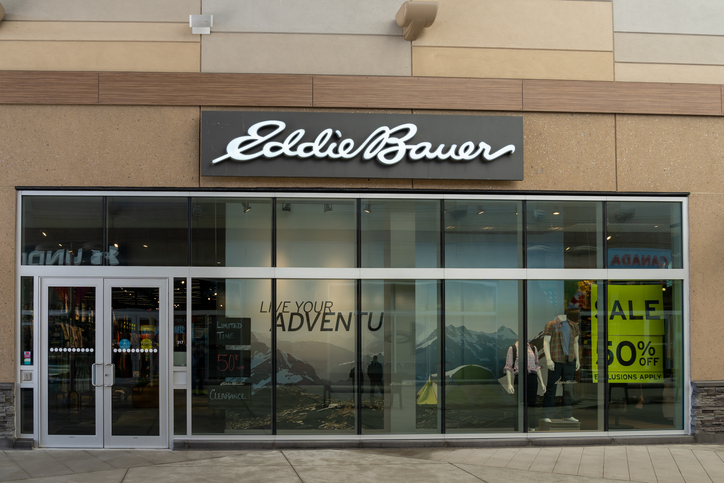
The operator of Eddie Bauer stores in the United States and Canada has filed for Chapter 11 bankruptcy protection.
That sentence is precise for a reason.
This filing does not place the entire global Eddie Bauer brand into bankruptcy. It does not shut down e-commerce. It does not impact international licensees. It applies specifically to the North American retail store operator.
And that distinction explains how we got here.
The Structure Behind the Filing
Over the past several years, the Eddie Bauer business has been divided across different operators. The North American brick and mortar stores have been operated under Catalyst Brands. Meanwhile, the e-commerce and wholesale operations were transitioned to Outdoor 5 LLC, a structure reminiscent of the divisive merger often referred to as the “Texas Two-Step.”
That separation is not incidental. It reshaped risk.
When scalable channels such as online and wholesale sit outside the retail entity that files, the bankruptcy becomes more targeted. It is no longer about the viability of the brand itself. It is about the economics of the store fleet.
Brick and mortar retail carries fixed costs that digital does not. Long term leases, common area maintenance charges, occupancy costs, and staffing levels do not adjust quickly when traffic softens. Even modest sales volatility can create disproportionate financial strain when overhead is fixed.
By contrast, e-commerce operations typically operate with greater variable flexibility. The fact that those operations are not part of this filing underscores that this is a store driven restructuring.
A Court Supervised Sale, Not Just a Reset
The company has made clear that Chapter 11 is being used to conduct a court supervised sale process. The stated goal is to solicit a going concern transaction for the retail business. If that effort fails, the alternative is an orderly wind down of store operations.
That posture matters.
A traditional reorganization assumes the existing operator believes it can restructure debt and leases and continue operating independently. A sale driven case signals that management believes the optimal outcome may involve new ownership, or at minimum a market test of value.
Retail bankruptcies tend to move quickly because the underlying asset, inventory, is perishable in value. Seasons change. Fashion cycles turn. Holding inventory too long compresses margins and erodes recoveries.
Running a sale process under court supervision provides structure and transparency. It also imposes deadlines.
What Is and Is Not Affected
The online and wholesale operations operated by Outdoor 5 LLC are not part of this Chapter 11 filing. International stores operated by separate licensees are also outside the case.
The immediate impact is concentrated in the United States and Canadian retail store base.
For consumers, that means stores may remain open during the process. For employees, it means uncertainty tied specifically to the North American retail footprint. For landlords and vendors, it means active negotiation around lease terms, payment priority, and future commitments.
Headlines often collapse these distinctions. This case requires precision.
The brand survives. The digital channel continues. The question is whether the physical footprint can be preserved in whole or in part.
Why the Timing Matters
Retail bankruptcies rarely hinge on a single weak quarter. They reflect accumulated pressure.
Higher borrowing costs increase the burden of leveraged balance sheets. Vendor terms tighten when credit conditions shift. Landlords become less flexible when vacancies rise across portfolios. Consumer traffic patterns continue to fragment between physical and digital channels.
None of these forces alone guarantee failure. Combined, they narrow optionality.
If the most adaptable segments of the business have already been transitioned outside the retail entity, Chapter 11 becomes a mechanism to isolate the highest fixed cost component and determine whether it can support itself.
That is the strategic backdrop.
What to Watch Next
Early court filings will reveal whether there is committed financing to fund operations during the sale process and how aggressively the company intends to rationalize its store base. Lease rejection timelines, vendor motions, and bid procedures will provide clarity on trajectory.
If a credible buyer emerges quickly, the narrative shifts toward preservation. If bids fail to materialize, liquidation becomes more likely.
Retail does not tolerate prolonged uncertainty. Enterprise value can erode quickly once suppliers, landlords, and customers adjust expectations.
This filing is less about the end of a brand and more about the recalibration of its physical presence in North America.
The coming weeks will determine whether that recalibration results in a leaner store platform under new ownership or a controlled exit from brick and mortar retail.
In this environment, structure drives outcome.