[1] Obituary of Joseph W. Kaufman, NY Times, Feb. 2, 1981, https://www.nytimes.com/1981/02/17/obituaries/joseph-w-kaufman-a-prosecutor-at-nuremberg-war-crimes-trials.html [Accessed Mar. 4, 2024]
The Legacy of Honorable Cecelia Goetz
March 5, 2024
Anne Eberhardt, CFE, CAMS
Senior Director
Valuation & Litigation Consulting
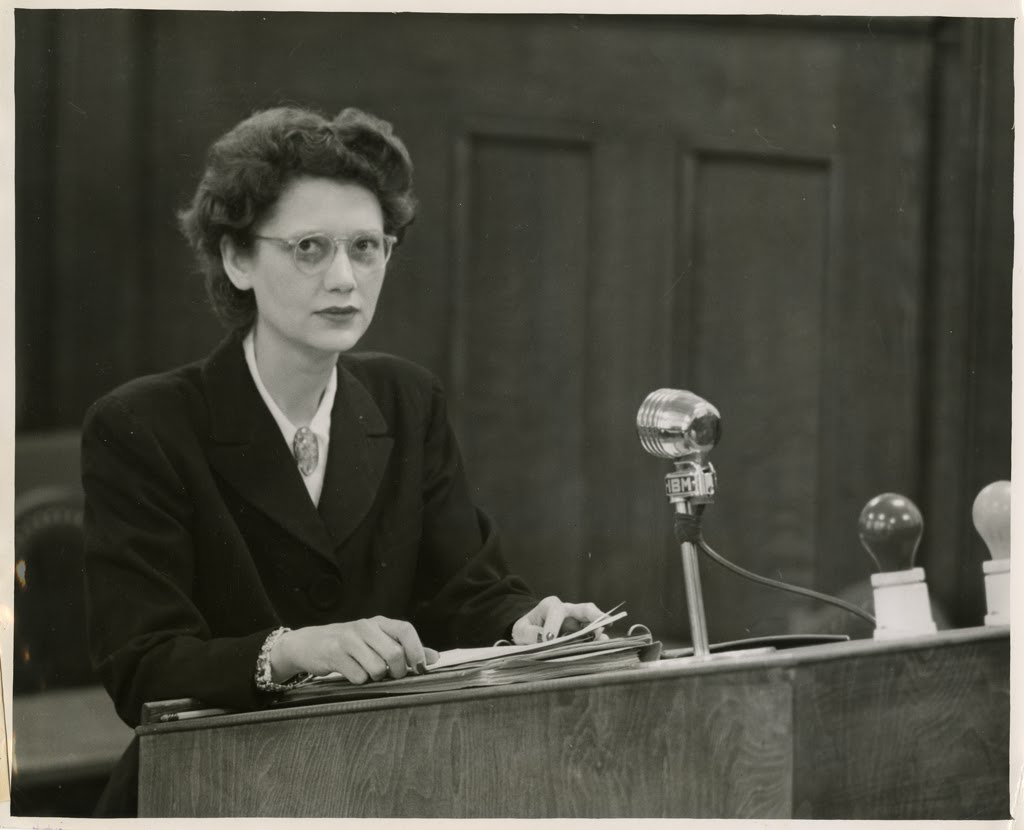
Every year, at its Annual Women in Achievement Awards, the New York Institute of Credit recognizes a sitting bankruptcy judge with The Honorable Cecelia H. Goetz Award. Intrigued by her story, and in recognition of Women’s History Month, I spent a little time learning more about Judge Goetz.
Born in New York City in 1917—that is, before the 19th Amendment was ratified in 1920, ensuring women the right to vote—Judge Goetz became a pioneer at every stage of her life, and not just for opening doors to women attorneys and judges.
In September 2004, a few months after her death, Goetz was honored by her alma mater, New York University School of Law. As a student, she joined the Law Review, becoming its editor in chief—the first female editor in the country of a major law review. She graduated as the salutatorian of her class in 1940. Finding few employment paths open to her, she found a position in the Solicitor’s Office of the U.S. Justice Department at the beginning of the Second World War, when men were leaving to serve in the armed forces.
After the War, despite having career opportunities available to her within the Justice Department, she insisted on joining the prosecution team at the Nuremberg Trials. In her later years, she described her participation in the Krupp trial as her most important work.
The Krupp case involved the U.S. Military prosecution of German industrialist Alfried I. Krupp, along with eleven other senior executives of the Krupp Group, a major weapons supplier to the German military forces. The twelve defendants were charged with waging “aggressive war,” plundering the industrial plants of conquered countries and employing slave labor.”[1] Only one of the defendants was acquitted, while the remaining defendants were convicted on the forced labor charge, which Judge Goetz helped prepare for almost two years: interviewing witnesses, reviewing German documents, and otherwise building the case for the prosecution.
Hon. Cecelia Goetz
In a 1997 interview with the USC Shoah Foundation, Goetz described her strong sense of frustration and outrage when, in 1951, the U.S. High Commissioner for Germany commuted the sentences of the men she had helped convict at Nuremburg.
Cecelia Goetz eventually made her way into a successful private legal practice that specialized in complex anti-trust and commercial issues. After her 1978 appointment to the bankruptcy bench for the Eastern District of New York—the first woman to be appointed there—Judge Goetz described herself as an activist judge, interjecting herself and asking questions to try to see to it that the “right side triumphed.” She reported that she never shied away from doing what she thought was the right thing, hating to see an injustice perpetrated.
The 1997 interview is well worth watching. It’s a fascinating discussion of the career of a formidable woman, who played an important role in laying the foundations for a world in which international tribunals adjudicate war crimes, women attend law school in the same numbers as men, and female judges—both in and out of bankruptcy—are no longer considered unusual.